

For most educators I spoke to, OpenAI’s move from Custom GPTs toward plugins came as a sudden shock.
Others weren’t even using them in the first place.
And some educators are sticking with alternatives such as Gemini Gems, which still offer the bounded, reusable custom-assistant model that made Custom GPTs appealing in the first place.
Since 2023, I have built Custom GPTs around problems in my teaching: recurring student questions, scientific misconceptions, exam preparation, and assessment design. Each tool accumulated decisions about what students needed, where AI tended to mislead them, and when it should leave the thinking to the learner. I even had a video on the OpenAI academy last year.
You could say I was a massive custom GPT advocate. My 2025 ASU+GSV talk, "How to pick Between Bots, GPTs, and Agents," drew more than 300 attendees, according to the organizers..Allegedly, more than Google’s session. I’ll take it. Back then, "agents" mostly meant tools like n8n I was teaching my grad students at USC. Codex and Claude Cowork didn't exist yet.
Now I am rebuilding some of that work as plugins. There are benefits. There is also another round of testing, troubleshooting, and checking whether students can use what I have built.
As my union colleagues put it: Who is responsible for protecting the teaching work that went into these tools?
OpenAI’s September 11 Enterprise migration guide describes a transition to plugins while acknowledging that the guidance is still a work in progress. Timelines and sharing arrangements for other plans may differ. That leaves educators with another job: figuring out which changes apply to their particular accounts and institutions.
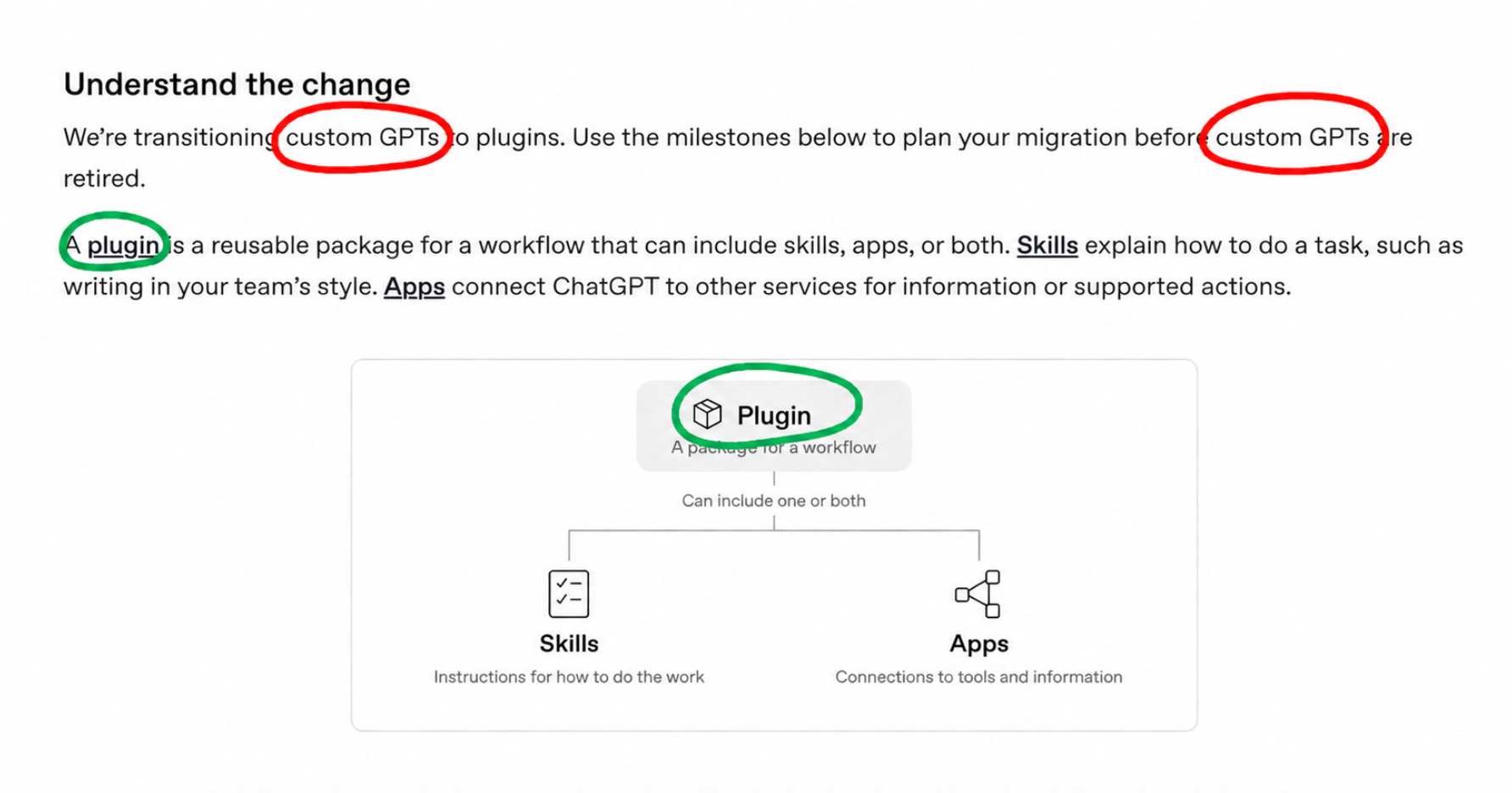
What I've heard from other educators is consistent: They want tech companies to take more responsibility for the continuity of the educational work people build on its platforms. If educators invest time turning a product into something useful for students, that investment should count when the company changes direction.
I say this as someone who uses Codex extensively. I asked my university to install it on my work laptop, but I had to provide a justification. It’s not cheap or free. I prefer OpenAI's tools to Claude for much of my work, well beyond image generation (and OpenAI is not paying me to say any of this). Using a product enthusiastically gives me plenty of reasons to examine its shortcomings.
When ChatGPT arrived, I began using it in my UCLA classes through extra-credit activities. Students examined AI summaries of scientific papers and identified missing nuance. When Custom GPTs became available, I built tools around specific classroom problems: scientific misconceptions, repetitive TA questions, exam preparation, and faculty workflows.
Why are they moving to plugins?
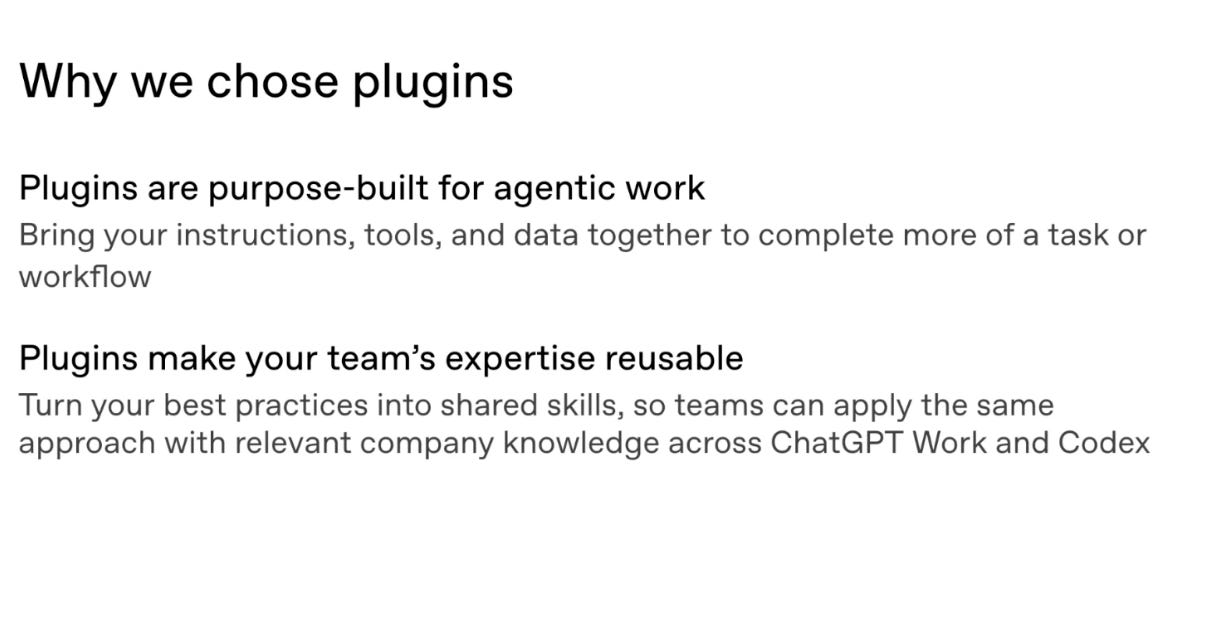
Earlier this year, someone from OpenAI's education team interviewed me about how I was using Custom GPTs in teaching. We went through multiple drafts over five months (you could say May-Sept was a long time). Shortly before publication, I was told priorities had changed. The tools we were documenting are now themselves being migrated.
I still thought the story was important to write about because educators I spoke to were already building real teaching practices around these tools. Now the tools we were documenting are themselves being migrated.
We loved GPTs for preparing students for job interviews and around the clock support. In every faculty workshop folks would light up at the endless GPT possibilities. Now try explaining plugins to a group of faculty who are just learning about chatbots vs. agents.
Don't get me wrong: I love Codex plugins. When the college faculty plugin came out, I realized it wasn't going to be as helpful for me as building my own various custom classroom and UnBlooms plugins. In many ways the plugin is more capable (for example it can convert 200+ pages at once), but in some ways more restricting (I will explain). Once I made the move however, I immediately wanted to teach others how to install their own.
For me, these tools represented accumulated teaching decisions. Rebuilding them involves going beyond whether those decisions still hold.
Here are six trade-offs I see in the transition from GPT to plugin/skills, followed by what you can do before your next class.